What’s in the counter.
Over 30 kinds of sausage, fresh meat from four farms, deli food from our own kitchen. This page tells you what we carry, where it comes from and what it costs.
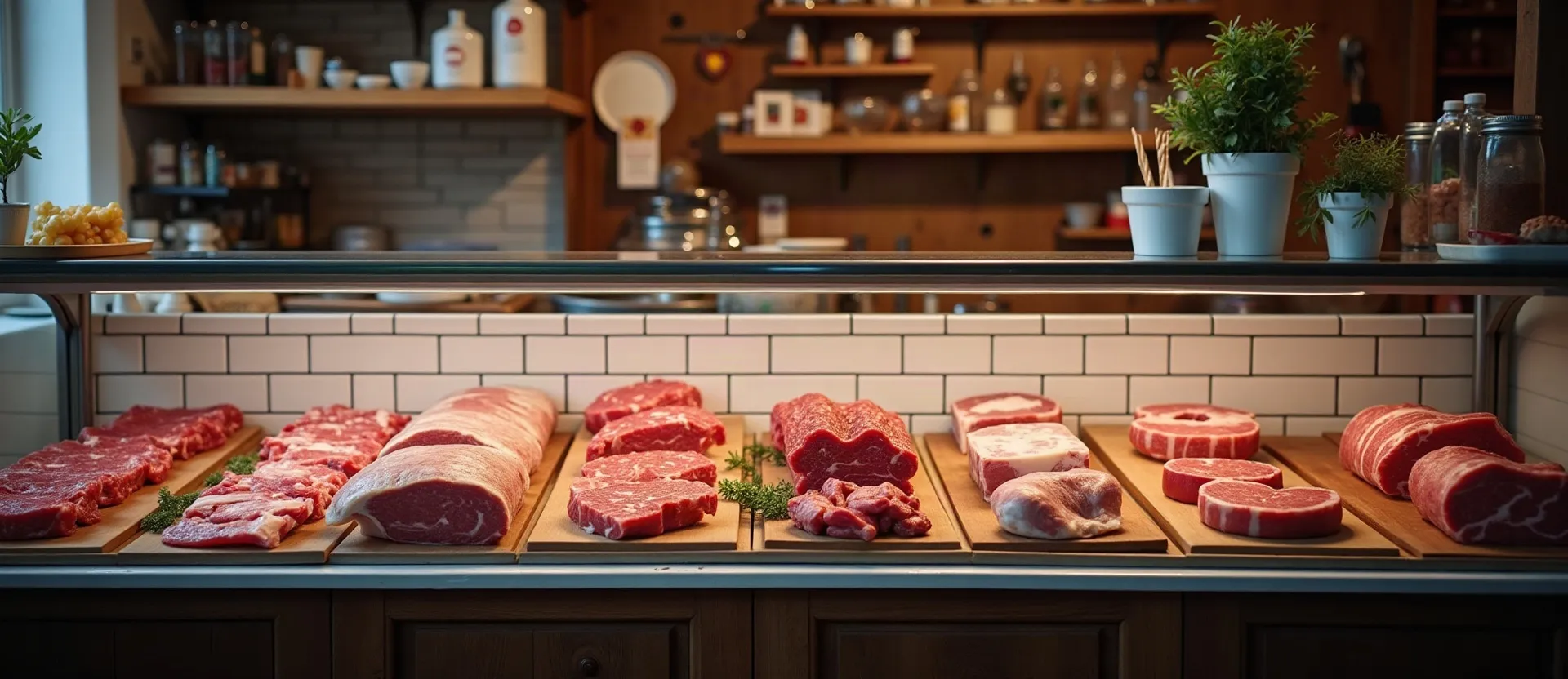
Beef, pork, veal and lamb
We break down whole sides ourselves. That means you can get any cut, even the ones that never make it into a supermarket counter. Tell us what you want to cook and we’ll cut it to suit.
Beef
From pasture-raised cows, aged on the bone for at least 21 days. It takes up space and time, but it makes the meat tender and full of flavor.
- Rouladen, roasts, Tafelspitz
- Goulash, soup meat, beef shank
- Rump steak, fillet, entrecôte
- Ground meat, always freshly minced
Pork
Pigs from a barn with straw bedding, no slatted floors. The animals take a little longer to reach slaughter weight, and you can taste it in the fat.
- Schnitzel, chops, neck
- Schweinsbraten with or without crackling
- Hock, belly, Schäufele
- Grilling meat, marinated or plain
Veal and lamb
Both in small amounts and not always in stock. We carry veal all year, lamb mostly in spring and fall. Best to give us a quick call.
- Veal schnitzel and veal roast
- Veal shank for osso buco
- Rack of lamb, leg of lamb, lamb breast
- Special orders within a week
Poultry
Chicken and turkey from a free-range farm, plus goose and duck in season. We start taking orders for Christmas geese at the beginning of October.
- Chicken whole or in pieces
- Turkey breast and turkey cutlets
- Goose and duck to order
- Stewing hen, when available
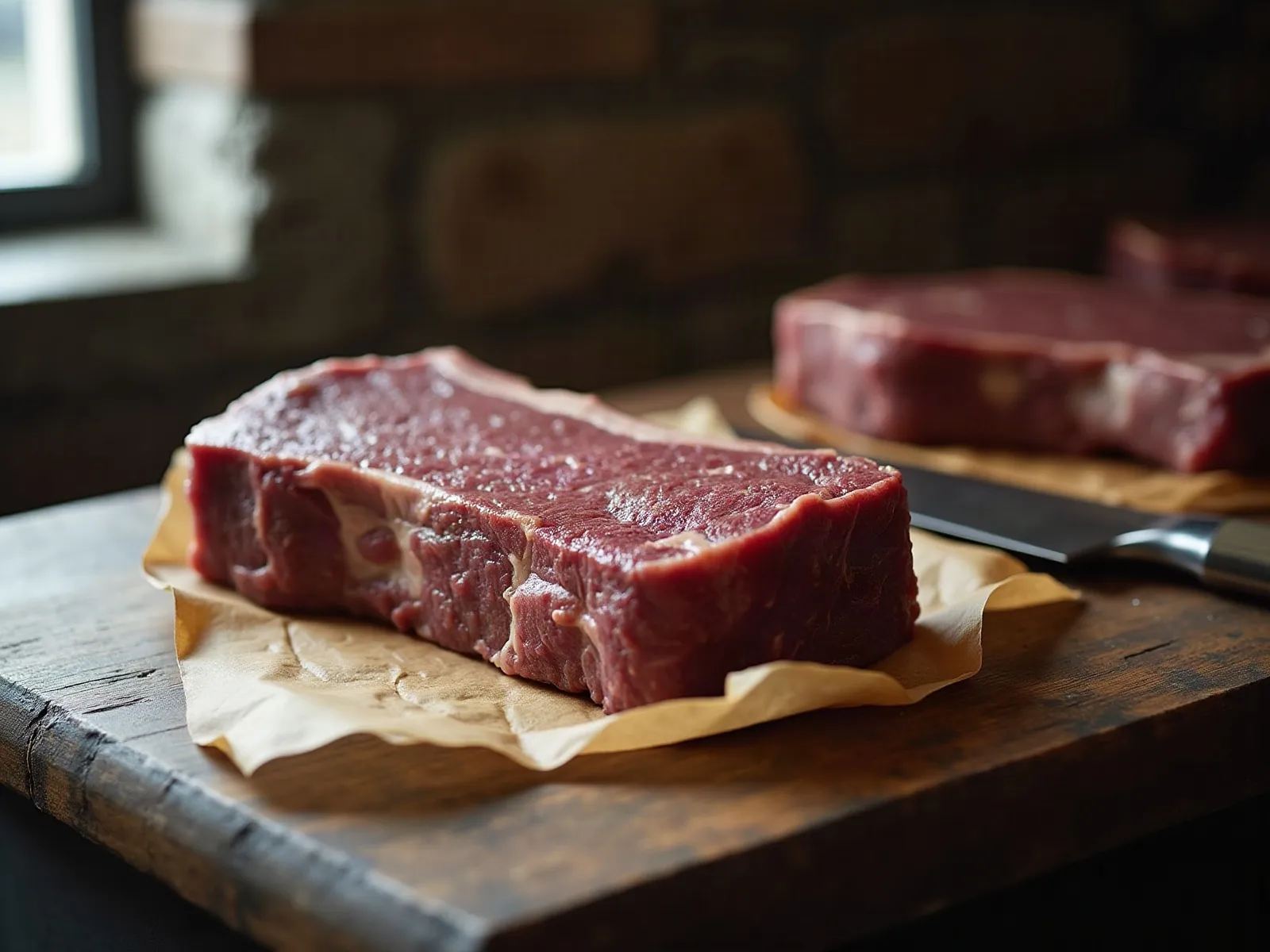
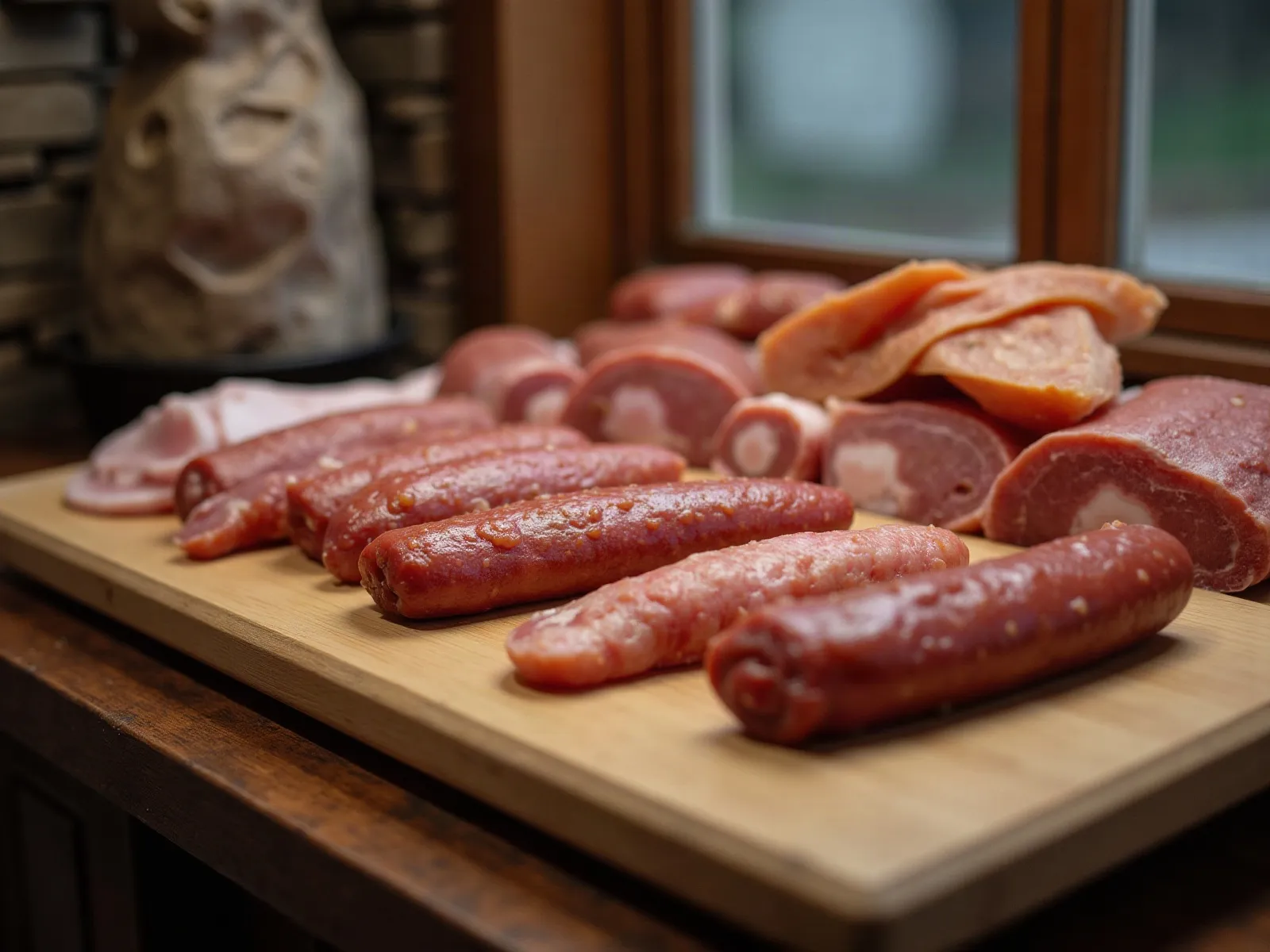
Over 30 kinds, all made in house
Everything in the sausage counter was made in our kitchen. We don’t buy in ready-made sausage and put our own label on it. Most of the recipes still go back to grandfather, and a few new ones have joined them.
Scalded sausage
Finely chopped and scalded in the kettle. The classic for a Brotzeit and for kids who don’t like anything too strong yet.
- Wieners and Bockwurst
- Lyoner, with or without bell pepper
- Fleischkäse, coarse and fine
- Weißwurst, fresh on Saturdays
- Gelbwurst and children’s sausage
Cured sausage
Air-dried and smoked, never heated. These take time, four to six weeks in the curing room.
- Salami, straight and in a ring
- Landjäger, in pairs
- Spreadable farmhouse Mettwurst
- Kaminwurzen smoked over beechwood
- Ham sausage, coarse
Cooked sausage
Made from precooked meat and finished in the kettle. It doesn’t keep long, but the flavor is strong. Best fresh on slaughter day.
- Liver sausage, fine and coarse
- Blood sausage and tongue sausage
- Presssack, red and white
- Aspic with pickles
- Griebenschmalz (lard with crackling) in a jar
Ham & smoked meats
Cured and cold-smoked over beechwood. The farmhouse ham hangs for half a year before it goes into the counter.
- Farmhouse ham by the piece
- Black-smoked bacon
- Cooked ham, no reformed meat
- Geselchtes (smoked pork) for dumplings and sauerkraut
- Kassler, ribs and hock
Leberkäs comes fresh out of the oven every day at 9:00, and in summer often a second time around 11:00. If you need a whole loaf, let us know the day before.
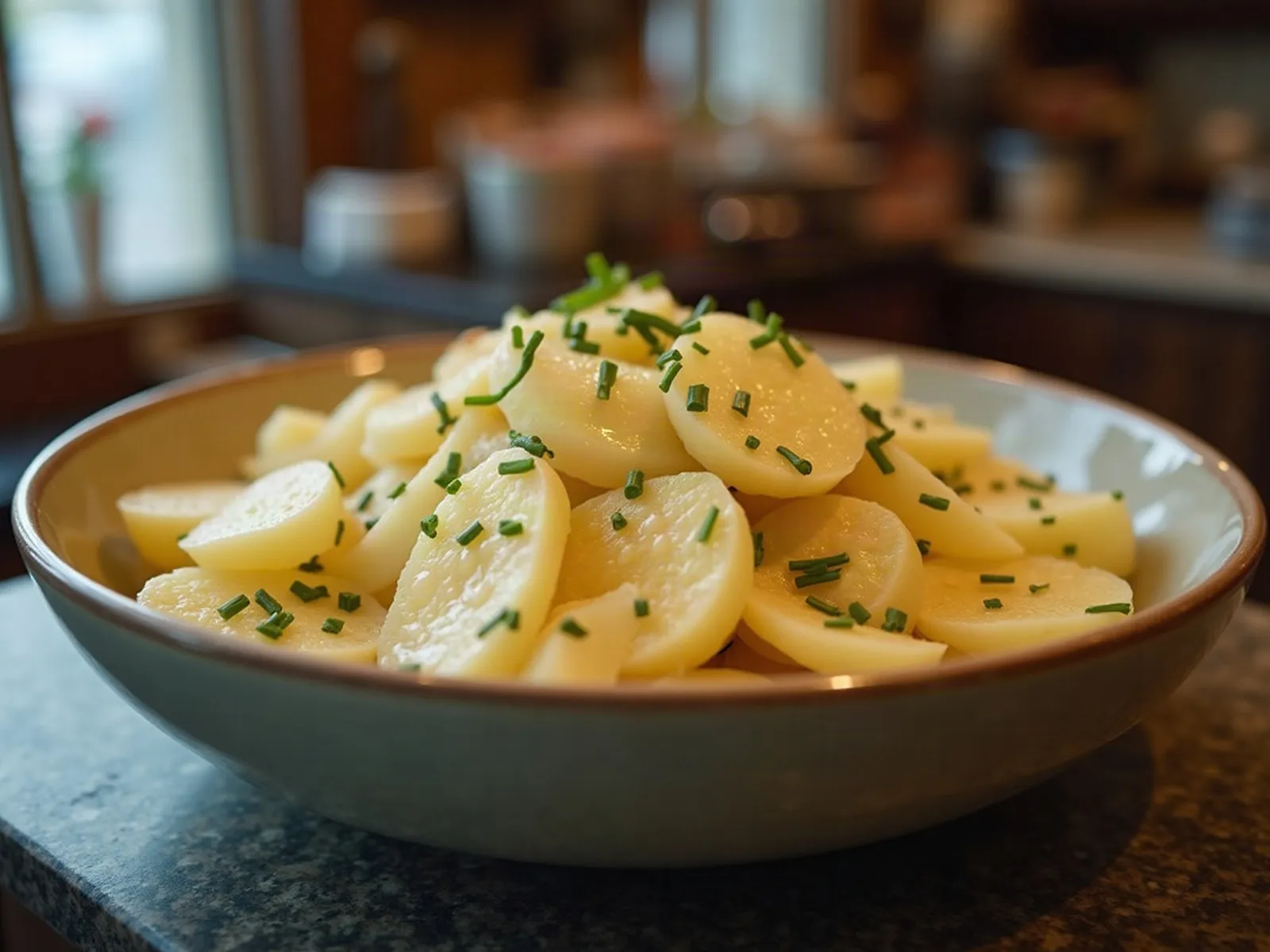
What goes in the bag alongside
Made fresh every morning without preservatives, so they only keep for two to three days. Prices are per 100 grams unless it says otherwise.
What’s only available at certain times
Part of our range follows the year, not the calendar on the shop wall. Here’s when you can get what.
Grilling range
Steaks, skewers, bratwursts and marinated pork neck steaks. We make the marinades ourselves, no ready-made mixes. If you’re grilling for a bigger group, it’s best to order a day ahead, then everything is portioned and waiting.
- Grill platter, ready to go, from 6 people
- Spare ribs, precooked, just heat them up
- Bratwurst spiral, 300 grams in one piece
Fall and Christmas
In the cold months the counter changes. We start taking orders for geese and ducks at the beginning of October, and numbers are limited. For December 24, the last day to order is December 15.
- Goose and duck from a free-range farm
- Rolled roasts and beef roasts for the holidays
- Fondue and raclette meat, ready sliced
Four farms. All in Mustertal.
No anonymity, no long transport. These are the farms we work with, and how far away they are.
Hof am Anger
Fleckvieh cattle, out on pasture from April to October.
Musterhof
Pigs raised on the farm, straw bedding.
Musterbauer
Veal and lamb, small herds.
Beispielhof
Free-range poultry, seasonal.
How often we slaughter
Twice a week. A business our size doesn’t need more. Pigs are done early Tuesday morning, beef on Thursday. In a normal week that’s eight to ten pigs and one or two cattle. A few more in grilling season, a lot fewer in January.
The farthest any animal travels to us is twelve kilometers. Most come from three or seven. No animal stays with us longer than one night, and slaughtering happens in the morning, not after half a day of waiting.
This isn’t marketing, it’s simple cause and effect. Short trips mean less stress for the animal, and you can see stress before slaughter in the meat later on. It turns tough and loses water when you cook it. If you’ve ever watched a schnitzel shrink in the pan, you know the result.
What happens next
We break everything down here in house, by hand. Depending on the week, half a pig becomes schnitzel, roasts, belly for bacon and whatever goes into the sausage. Nothing that can be used gets thrown away. That’s exactly where Presssack, aspic and Griebenschmalz come from.
Before it’s cut up, beef hangs in the cold room on the bone for at least 21 days. For roasting and steak cuts it’s often four weeks. You’ll find the details on the Craft page.
If you’d like to see the farm
In summer, Hof am Anger opens its pasture on a few Sundays. We put the dates on the shop door and pass them on at the counter. If you want to know where your food comes from, you should get to see it. And nobody gets a funny look for just wanting a pound of sausage, either.
What’s in it is on the label
For loose goods we’re required to label the 14 main allergens. We do that with numbers on the price tag and a list that’s available in the shop.
The most common cases in our counter:
- Mustard is in almost every scalded sausage, in aspic and in most marinades
- Milk and lactose are in cheese sausage, Obatzda and some spreads
- Gluten is in Leberkäs made with bread rolls, in bread dumplings and in breaded products
- Celery is in beef broth, aspic and several salads
- Egg is in meat salad, mayonnaise and breaded meat
- Sulfites can be found in cured sausage and in some salads
If you have an intolerance, ask at the counter. We check the recipe instead of guessing. With a pre-order or a catering enquiry, please mention it right away, and we’ll plan for it from the start.
We can’t guarantee that anything is completely free of traces. In a butcher shop everything runs through the same machines, and we couldn’t honestly offer a separate production line for individual orders.
We’ll set it aside.
Half a lamb, three kilos of Rouladen or a whole loaf of Leberkäs. If it’s not in the counter, we’ll get it or make it. One call is all it takes, and it usually works out within a week.